

Dreaming in Colour: Gordon’s Grandson on Love, Loss, and Letting Go
Gordon’s Grandson
Gordon’s Grandson isn’t your typical bedroom pop artist. His music twirls a mix of whimsy and deep connection, in a way that makes you feel a complex range of emotions. Music isn’t just notes on a piano to the Melbourne-based artist, it’s a way of living. There’s an interesting feeling his music provides, longing for nostalgia while looking to the future. Underneath the mask of a musician, Harry Prior is paving the way for artists in Australia, with a passion for music and personal expression matched by few.
As he continues his rise to world domination, he’s decided to take over Australia first - tour dates here!
★
Kade: To start us off, please introduce yourself.
Harry: Hello, my name is Harry, and I am a musician living in Naarm, Melbourne, Australia. I make whimsical, lo-fi pop music.
Kade: To begin, a lot of your music evokes really nostalgic feelings, almost as if the melodies were created with memories, if you will. What goes into the creative process for your music to be able to elicit emotions like that?
Harry: Oh, that's a good question. I listen to a lot of older music, and I think what you consume kind of dictates what you create a lot of the time. I consume a lot of music and attach it to memories. So, I'll listen to, not usually an album, just like maybe 10 or so, probably more, maybe like 12 songs, if not more, between 10 and 20 songs in a playlist. And I'll listen to the songs, usually for about a month or until I get sick of them. And then I just don't listen to them for a very long time.
So, I have like hundreds, I have thousands of songs that are very attached to specific moments of my life that I don't listen to regularly, but when I do listen to them, I just feel very transported back. I don't think it's necessarily a conscious thing, I think, because I listen to music like that, I subconsciously use melodies that have stuck with me that feel timeless and that kind of feel nostalgic. Because everything that feels super in the moment doesn't really stand the test of time a lot of the time. So yeah, I guess that's part of it.
Kade: You mentioned that a lot of the music that you consume changes the way that you make your own music, with influences from Bowie to Elton John, to Gorillaz and TV Girl. Considering you described it as a fusion dish of genres, what cuisines would you combine if you described your music as a dish?
Harry: Because the cuisines are like genres, I don't know if I can do it. I know people can do colours and music. I can't do that. I can't name things. Like I had a car for a bit, and I could never name the car. Any of my toys, I could never name them. I do struggle to attach names to things, but I guess I could say it in terms of the genre. I think if I was to describe my songs as a food, every song is very different, I think.
Kade: Well, what about KISSING?
Harry: KISSING. KISSING is like a spaghetti bolognese with maybe some lemon on it. Something kind of citrusy and sweet with some sort of hit of flavour. Like it's a very classic meal. I feel like just your typical spaghetti bolognese.
Kade: One thing I wanted to ask you about was the EP you released last year, Love Me, which wrestles with the tension between authenticity and marketability.
Harry: This guy did his research, you're trying to be like Nardwuar.
Kade: Yeah! [laughs] Considering it's almost a year on from that EP and you described it, saying that you “were selling out on your own terms”. I wanted to ask you how has your relationship with that term has evolved over the past year?
Harry: I think I've had some shifts in the way that I view music within society and I think I very much view it less as selling out now and more about building a connection in a translatable way, or in a way that other people can understand no matter where they're from or how old they are. I think marketing is just a communication of something and I still own all my masters and all my rights and stuff, so that feels good.
Selling out means making your music more for the masses. I think I take parts of selling out, like the marketing side of it and how to communicate a product, but I just do it on my own terms. That way I don't sacrifice my sound and the instruments that I choose or the way that I mix my songs or the things I sing about, just to appeal to a large group of people. In that way, it still feels very honest to me.
Kade: Bouncing off the talk of mixing and owning your own masters, you produce, mix, master, market, basically do everything yourself, which is a rare kind of control these days. I was wondering what the most rewarding part of that process is, but also what the most maddening part of that process is?
Harry: I think it's probably a curse. I don't think I publicly advertise this because it's a bit of an ick, but I'm an only child. I feel that, as an only child, you have some sort of control over all the things you own. I think maybe that just stuck with me for, maybe for worse. It is a little bit maddening. But I think this year I've been a lot more open to collaboration, and I think I’ve been self-reflective on my want and desire to do everything myself. It is so rewarding to feel as though you did something completely yourself. It's kind of like baking cookies from scratch compared to using box ingredients.
Maybe sometimes I take it a little too far. I don't need to be out in the cocoa fields getting the cocoa myself just for cookies. But you know, I think I do it to a healthy degree. I don't like a lot of the sounds of synths, so I'll just use electronic or digital plugins for that. Something like Analog Labs or just Logic stock sounds. I don't think I'm too obsessed. Maybe it's something I gotta do more self-reflection on.
As for the most rewarding part... I think it's rewarding that I feel like I'm, in a way, proving something to myself. It's like that guy that made that bicycle. I think a lot of the industry has a lot of people, with a lot of resources and I think I'm just proud of myself that I'm proving that I can do it by myself. There’s this one guy from somewhere in the UK and he was going up against this really rich guy in cycling, but this guy made his own bike. Then he rode it, and I think he beat the guy. I watched this documentary on it. I just felt like I related to that.
I think there is something very rewarding, especially because I don't come from a wealthy background. My dad is a high school teacher. My mom works in childcare. They don't know anyone that does music. Very luckily, they put me in piano lessons when I was in prep. That's why I got a head start with music, but it feels with a lot of artists, when you dig a bit deeper, it somehow turns out that they had this connection or that connection. But yeah, it feels rewarding to myself. I feel like I have some sort of self-worth that comes out of it. Maybe that's not a good thing. I don't know.
Kade: Going back to what you were saying before about the type of music you make. Some of your tracks go from whimsy and silliness to romantics and raw honesty. Do you consciously chase that variety or does it just come naturally in your day to day writing?
Harry: Definitely comes naturally, I think. The best strat that I see with a lot of people that I know is to make a very cohesive artist project with a very cohesive visual and a very cohesive sound. I think next year I'm planning on trying to do that a bit more and having a very cohesive project under a different name and a cohesive aesthetic just to try it out. But I struggle with that. I have a lot of people tell me they think I have ADHD and I wouldn't be very surprised by that discovery.
I listen to such a wide range of music and I want to make all different kinds of things. The downfall of listening to the music in the playlists attached to memories is that you don't do much mood boarding. On Pinterest, I started doing mood boarding for visuals when I first started doing cover art last year, when I realized how important the visual aspect was. I realised that the more I mood boarded and tried to make a cohesive visual aesthetic, the better I got at creating that.
Recently in the past week, I've started making playlists just based on mood. I've got a playlist called Vines on an Old Castle or something like that. So, I guess it's like making my own albums and mood boarding in music. Maybe this will actually help me finally make one more cohesive sound, but definitely not on purpose that I do this.
Kade: You've spoken before about how interested and entwined you are with fashion. Do you think that living in Melbourne has changed the way that you think about performance and stage presence, especially compared to when you first approached music back in Tassie?
Harry: Yeah, I think you can break down music or fashion or photography down to very simple elements and principles, or ingredients that you would use. With fashion, I see it all as shape; how does something fit, texture; how does something look and feel? Does it look like concrete or wood, or cotton or fur. So, it's shape, texture, colour.
Once you break something apart like that, what do other people do with it? What do I actually like? It's easier to understand what you like and dislike. With visuals, it's the same. I guess you have those principles that people use like framing and how you frame things, leading lines, colour, lighting. I think when you're around people doing more experimental things with fashion, it's easier to break it down when you're seeing it in real life.
I think with stage presence, in the past maybe six months, since I've started doing live shows, I really like Jarvis Cocker from Pulp, the way that he moves his body physically. I think that's super cool. I really loved Tim Curry, especially in Rocky Horror Picture Show. My friend Jake, Them & I, actually put me onto that. I love the way he moves his mouth and the way his body language isn’t masculine or feminine. I guess some people would say it's feminine, but I think it's its own secret third thing.
I think it's just very expressive. Not necessarily in a gendered way. I think that's really cool. I think a lot of people can get stuck in gender and what they're supposed to be doing within society. I think not caring is very important. I think Melbourne is a space where it's a lot easier to not care than somewhere smaller like Tasmania, where everything feels like it matters infinitely more.
Kade: Do you think that idea of genderlessness extends to your music as well?
Harry: I think so. I think I sing a lot of higher parts that you wouldn't get a lot of male pop artists singing. Something like Tiptoe Through the Tulips by Tiny Tim. I love that. I don't try to make my music catered towards one specific group of people. I think when I do my live shows and I see the turnout and the type of people that come, especially the last Sydney show that I did it, makes me happy. There was an 11 year old there. There was a 60 year old there, all different types of people. That just makes me very happy that my music can resonate with a lot of different people.
Kade: Speaking of that Sydney show, that was your first headline show right?
Harry: Yeah. Yeah, it was.
Kade: Congratulations on that first and foremost. How was that experience and how was the pressure of being the main act of the night?
Harry: Oh, it was strange the night after because it was around 9 o’clock and I was just sitting on the couch in my underpants eating some Doritos or something. Everything was going through my head and it's a big adjustment. But I felt freer in the way I moved around that day because it was my headline show. I wasn't worried to step on anyone's toes in what I was doing. I think I felt permission to prioritise my performance, which felt nice. Having Breakfast Road, who played as my band, TJ from Breakfast Road, he's a tech wizard. He's using converters and splitters. I'm sure he could take apart a sound desk and rewire it to do whatever he wanted, so having him set up a lot of technical things that I was just clueless on was so incredibly helpful.
I think this was maybe like my 7th show ever of all time, but the first two shows I did were with a band and then I couldn't afford to do the next couple shows with the band because they were just opening slots where I don't get paid much. So, I was doing a lot of solo shows. So going back to having a band, I felt like I took everything I learned from those solo shows and I was able to apply it. Hopefully it was a good mix of nonchalant and extreme chalant.
I didn't want to be too much either. Hopefully there was a good energy, but not in a creepy, intense way. I thought I did pretty good for my first few live shows, and then I look back and I'm like, oh, there's these things I want to do differently. I'm sure in six months I'll look back at this show and hopefully, I'll be a lot better. But right now, I'm feeling very proud of that show.
Kade: Speaking of live shows, would you want to keep your performances true to the studio versions of your songs, or would you like to reinvent them in a live setting?
Harry: Oh, at the moment, it depends on the song, I think. I think some songs for this upcoming tour, the KISS tour, I want to take what I did and just emphasise it. Like taking a sentence and just changing the format of a piece of writing. I want to make it just hit a bit harder. I want to be able to be like, oh, this has come to life, I can see it in real life.
For other shows, something like Love Me, I like doing a bit of both. Something like My Lover Girl, I think I always want to keep quite true to the studio version. I say studio, but really, the bedroom version. I guess that's where a lot of the sound and the soul come from. But then when it goes into that chorus, when I produced it, I have basically everything in mono except some of those vocal effects in the verse. Even the drums and the keys are in mono. Then when it goes into the chorus, everything's really wide and it's stereo. So, when you're listening on headphones, it feels like everything opens up. But in live, you can't really translate that because everything's bouncing around the whole room and it's in stereo anyway. So, I made it so the verses feel like they sway side to side and then for the chorus, the guitar is a bit more, I guess, punk-esque, like a bit more distorted.
It's got a lot more drive. So yeah, I like the idea of reinterpreting it for live. But I think I'll always do a blend of it. Some songs, I think, will always just be an emphasis on what I've already done rather than a recreation.
Kade: Do you have any ideas for the visual side of your live shows?
Harry: This live show was the first one where I did a bit of makeup. I put a bit of eyeliner and lipstick on. I really liked how that looked on stage. I'd be a fan of doing something else with my hair and makeup to look a bit crazier. It has a different energy doing it in front of people than doing it on a camera on social media. I feel like there's a certain energy that it can bring live. I guess I will keep taking inspiration from live acts I really like. But I've never had the opportunity to have a screen behind me while I play. I don’t think that will happen until I'm playing bigger venues.
But I think it'll be an instance of, everything else I do, I'll do it once, I'll look back and I'll just wonder what I could do better or what would have made me happier with it. I guess I'll just get better every time. With the lighting, I really enjoyed having the backlighting. That was cool. It adds aura, very Mk.gee-esque. Fog machine. I think when the time comes, I will do my research and break it apart like I do with style or videos and try to find out what I specifically like about the things that I like and then taking elements of those.
Kade: You mentioned there that you would just keep looking at the live shows that you like. Are there any that you've been to that were visually that you think visually left a mark on you?
Harry: I always remember like the first live show I went to, I think was the Queen live show with Adam Lambert singing. It was the one thing where Brian May was coming down from the sky on a moon. I was like, what is this, this is actually insane. This is crazy. I don't know if I'll ever do anything like that, but that's like permanently engraved in my mind. Brian May standing on top of the moon. It's pretty epic.
Kade: While we're on the topic of influencers, jumping from visual to musical, if you could collaborate, are there any artists from your list of influences that you would like to collaborate with? If so, what type of song do you think you would make with them?
Harry: I have two big, small artists that are so infinitely cooler than me. I really like her, her name's Ella Woolsey. Have you heard of her?
Kade: Yeah, I have before.
Harry: Her voice is so haunting and it kind of reminds me of Esha Tewari's voice. But I love her melodies. They're so haunting and I would love to do something with her. I follow her, but I don't think she knows who I am. So maybe if the interview does well, she'll see.
The other one's Sean Trelford. His mix and production style is so cool. There's so much soul in his music that it's gut-wrenching and makes me want to cry and laugh and feel all kinds of emotions. Those 2 are really big, but I mean, yeah, I would love to collaborate with any of my friends like sweet boy, and Jake [Them & I]. That'd be fun. I think Jake and I had a bit of a joke that we were going to make a new artist project and rap about cigarettes on rage beats, and we weren't going to tell anyone it was us.
So, if you ever hear a rage beat or some kind of Dean Blunt instrumental with two guys singing about cigarettes with auto tune on, it might be us. You never know.
Kade: You've got the Liam McCain method down pat.
Harry: Oh yeah, yeah, definitely.
Kade: One thing that I wanted to ask about was your namesake, your grandfather. I wanted to ask about how the relationship between you and your grandfather has affected not only your career path, but also the path of your entire life.
Harry: I think the year that Gordon passed away, I had a lot of other family members and people that I know passed away. I think in like a 12 month period, I think around seven people passed away in my life. It was like a very heavy time, especially because I was year eight. So maybe I was like 14 or something.
I think it just made me care about everything so much less like school and all the things and friendships and all things that are important. It forced me to look really deep within myself and wonder what I actually wanted to do with my life and how I wanted to live my life in a way that I wouldn't regret, because I saw a lot of people move on from this life and definitely not regret anything they did in this life. It just forced me to put myself in the best shoes to really think about everything.
It was very numbing for a long time, and I think I listened to a lot of music throughout that time that helped me feel and make sense of things that I was feeling. So, I think that's just the medium, you know, I wasn't watching a lot of movies, or I wasn't painting or anything. I think it was music, and it will always be music. So yeah.
Kade: Do you think your own musical output has felt like an outlet for you at times?
Harry: I think it was an escape for me at the start. Now it is like a lifestyle. Like everything is for my music. I don't really spend much money on things that aren't for my music. I'll be getting like a new keyboard or a new this or new that. Sometimes with the way that music is at the moment, you have to do so much strategizing. Half of my career is planning the type of content and how people will understand what I'm doing and accept it.
I think my favorite weeks are the ones where I get to practice for a live show and then play in front of a bunch of people and actually be there or just produce for a week straight and pour everything all out and write lyrics and stuff. It's like a game. Half of my career is communicating what I'm doing to other people and making those kind of videos that do well within the context of all other media that exists and trying to cut through the noise.
In those times, it's more strategizing and less self-expression. But definitely better than, I don't know, what else would I be doing with my life? I don't know. Definitely better than just being sad in my room and not doing anything.
Kade: Looking toward the future, when can we expect new music from Gordon's Grandson?
Harry: On the 22nd, around the 20 something as of November. So, I guess very soon I'll be releasing an EP. Next year, hopefully, I'll be releasing a lot more. We'll have to see.
Kade: Can fans expect to see more headline Gordon's grandson shows in the future?
Harry: I think they might. I think, yes, in Australia, not worldwide just yet, but in Australia, yes.
Kade: Speaking of worldwide, are there any places in particular that would be dream places for you to play shows at?
Harry: Man, I want to play a show everywhere. I think less about playing shows, actually. I'm happy to play a show wherever. It's just like there's different food I want to try. I want to go to the Philippines. I want to go to Mexico. There's a lot of places with really good food that I want to try. Being Japanese and going to Japan and having Japanese food, it definitely does taste different in its country of origin. I would love to travel anywhere. I know the US is going through a lot of things at the moment, but I think I'm inspired by so many artists from there. I have a lot of people that connect with my music from the US that I think that is still a very big dream of mine to be able to go over there and see it for myself.
Kade: One final question for you. If you could choose three things, whether that's musically, personally, or even fashion related, what do you want to achieve within the next year?
Harry: I'd love to at one point play in front of 1000 people at least. The most people I've played in front of I think at this point has been 300, 400? I feel like, it's like when you get from 9,000 followers to 10,000 followers, it's a satisfying thing. I think playing in front of 1,000 people would just feel like a big milestone.
I think using my intuition more instead of thinking about numbers and analytics and just having that do well, I think will be really rewarding. Yeah, that.
Then I want to have big muscles next year. Gordon's Grandson, big muscles are on the way. I think I'm going to have to lock in at the gym or something like that. Yeah, big muscles incoming. For when I play in front of the 1000 people.
Kade: Yeah, and then you can wear like a tank top, like the one where it's got like just the single straps.
Harry: That's exactly right. You know what's up.
Kade: Thanks so much for your time, really appreciate it.
Harry: Yeah, thank you so much for the very thought-out questions.
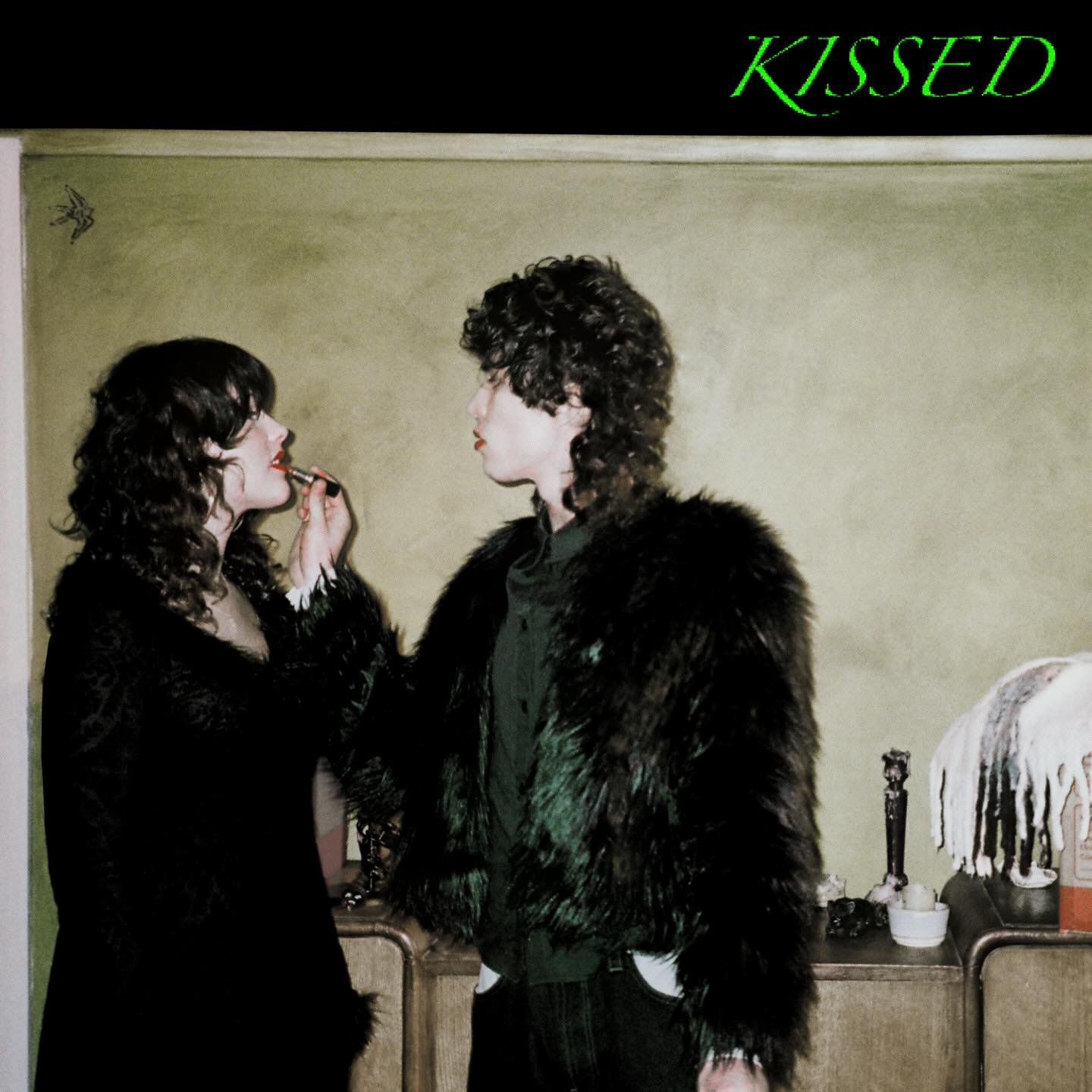
Listen to 'KISSED’ by Gordon’s Grandson below.