

Faris Badwan on expression, subtlety, and the darkness of sixties girl groups
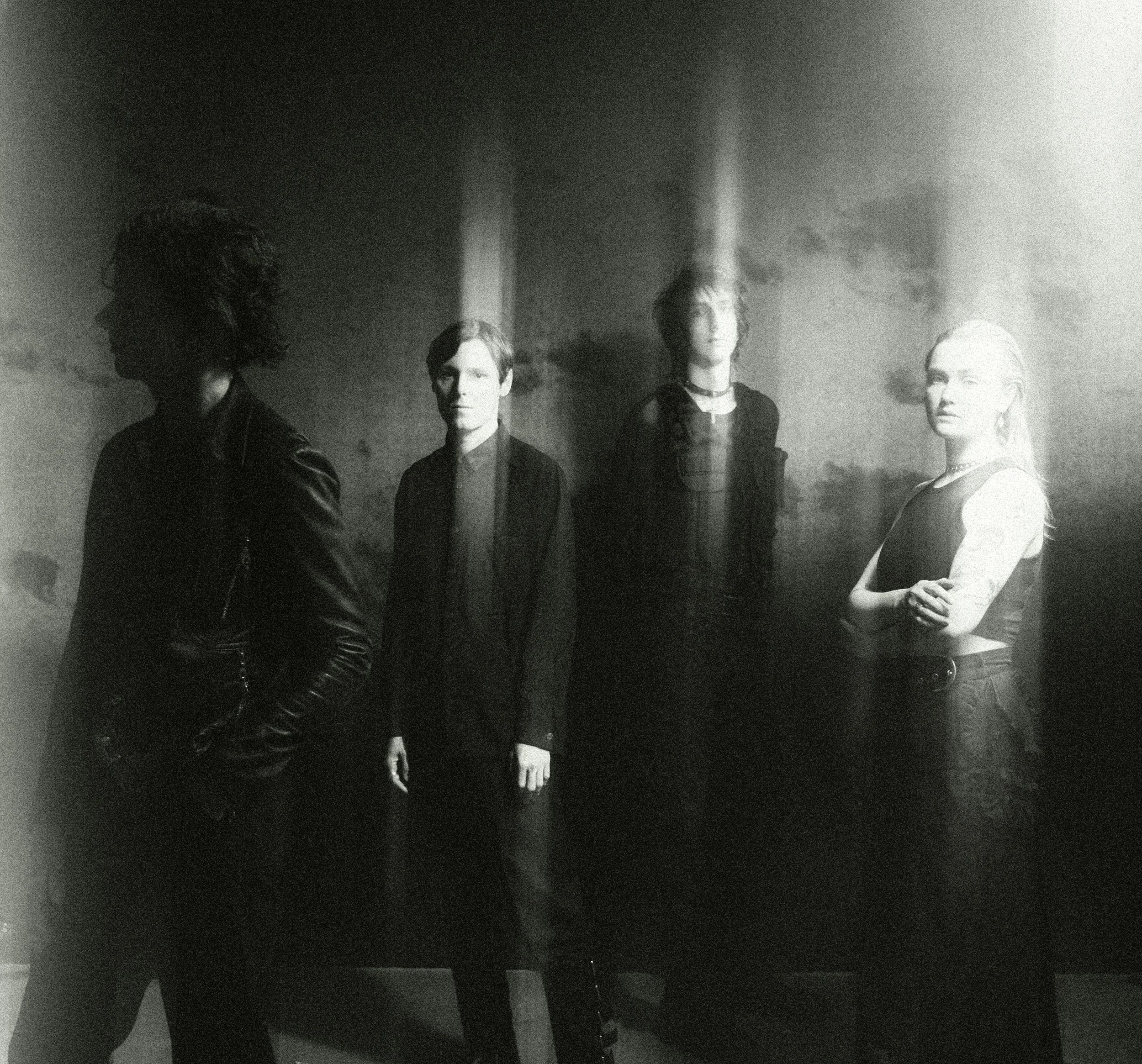
The Horrors. Photo credit: Sarah Piantadosi
The Horrors are one of the only bands that have made it out of the original indie sleaze scene. This is most definitely due to their adaptability and this development isn’t lost on Faris Badwan, the lead singer of the group.
“The industry has really changed a lot,” he says, sipping tea in the light of the diffused London sun as we chat over Zoom.
“No one actually prepares you for how much creative industries are going to shift if you’re in them for a long period of time. If you’re working for 20 years, the industry you’re in after that 20-year mark, has so little resemblance to the one that you started out in. It’s really interesting.”
Not only is Badwan aware of how creative industries have changed for musicians, he also acknowledges how much things have changed for journalists and how the industry has morphed for those of us interviewing and writing about artists like him.
“Sometimes you start out in a certain aspect of the industry that will align with your strengths, and then by the time you finish it’s like those strengths are no longer required,” he ponders.
“It’s sort of like your success is determined by your ability to adapt, more than your actual initial talent.”
An appreciation for music journalists and their place in the broader landscape of the industry is rare. However, an appreciation for not just for us writers, but for creativity and expression of any medium is what makes Badwan, such an innovative artist.
The Horrors released their debut album Strange House in 2007 and since then, have grown to become a band that cannot be defined by genre or subculture. Reflecting back on those early years, Badwan tells me the main point of what The Horrors were doing all the way back in the early 2000’s was both writing and performing music that let people in. They presented music in a way that showed people you don’t need complex knowledge to use it as an avenue of expression.
“When The Horrors started, for our first show we had two original song sketches and the rest of them were covers, and we were playing basically three chord garage,” he says, reflecting on the early days of the band.
“What’s so great about that is it’s the same principle as punk. It’s exciting and inspiring for people because they feel like they can do it – it feels like it’s within reach and you feel like you can go pick up a guitar and you don’t need 15 years of musical theory in order to be part of this thing.
”I think that’s a really important part of music.”
Approaching music in this way worked for The Horrors in the early days, but Badwan explains that over time the band began honing in on specific details within their writing process, leading them to naturally develop their sound.
“You naturally want to explore other things - you learn subtlety and you learn your own ways of expressing these specific things,” he explains.
Of course, Badwan emphasises it still doesn’t mean you need to throw yourself into years of intense musical theory, instead he suggests any musician, or artist in general, focuses on how the music feels because that’s what’s going to really move people, at least, that’s what The Horrors have experienced.
“People aren’t always aware that the really raw forms of expression are the most human and sometimes they’re the most effective,” Badwan says.
“It’s visceral - it can be a really complex and delicate piece of classical music, but it still connects with you in a very raw, animalic way, [it’s] very primal.
“Expression should be intuitive and speaking for myself, my creative output is way better when I don’t think and when I just rely on my instincts and intuition.
“You can have all the theory in the world but in the end, the emotion is really the bit that is going to make you remember it and return to it.”
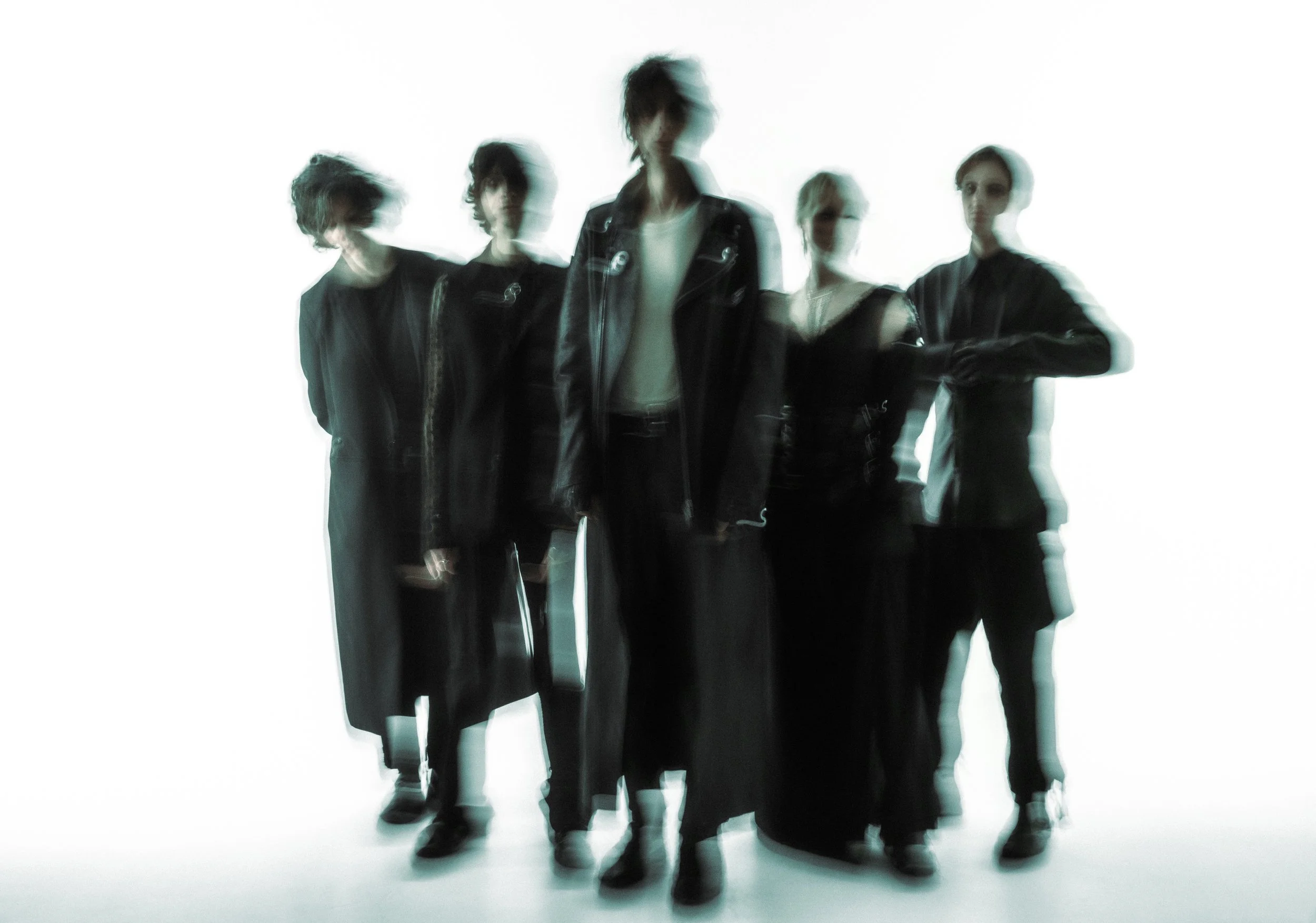
The Horrors. Photo credit: Paris Seawell
The more we talk about the raw reactions people can have to music, the more our conversation naturally moves into the atmospheres music can create.
Whether you’re hearing a track at a live show or just through headphones as you’re running errands, the mood of the melody can manipulate your mood and transform the way you’re experiencing your day.
The mood of The Horror’s latest album Nightlife is incredibly expansive. There's darkness there and a lot of power, however the power feels contained and insular, rather than bombastic and loud. The album’s opening track ‘Ariel’ feels both haunting and gentle, balancing sweetness with a deeper shadow, setting the tone for the tracks that follow.
As it turns out, this contrast is something Badwan loves listening to himself. When discussing the juxtaposition in music, one genre he mentioned certainly wasn’t one anyone would probably expect him to mention, but the fact he did, again, just shows how much he appreciates art in all its forms.
“I love contrast in music; I love when something has two opposing feelings in the same song,” he tells me.
“The biggest part of my record collection is sixties girl groups. I like the whole spectrum and sixties girl groups were written and created for a teen market, you know [with] teenage love and relationships, and melodrama in that way, but within these really melodic, sweet pop songs, you’ve got quite dark imagery as well.”
As Badwan mentions this to me, I start thinking about the girl groups from that era and suddenly realise just how correct he is. From the abusive relationship depicted in The Crystals’ song ‘He Hit Me (And It Felt Like A Kiss)’, to vicious girl gossip and in-fighting described in The Supremes’ track ‘He’s All I Got’, sixties girl groups really honed in on the darker side of relationships and veiled those intense lyrics with infectious pop melodies.
“You’ve got really nightmarish stuff sometimes and I love the whole idea of that you know, it’s created for these kids that are getting into music or whatever, but hidden within it is this quite dark stuff.”
He also points out a specific Shanghai-La’s track he enjoys which despite sounding very light and fun, details the death of the protagonist's boyfriend.
“Partly it’s the subversiveness that kind of makes me excited about it, and I think the best kind of art disguises its message - I think that’s what makes it powerful.
“Whatever your message is, I think it really connects with people when they have to do a little bit of the work for themselves you know? They have to do that last step of discovery on their own and then it really connects.
“Subtlety is… you have to learn it, you have to learn to express yourself in that way, but it’s so worth it.”
As we talk more about the type of music and art that draws his attention, Badwan tells me more about the types of art that really capture him, and the artists that have influenced The Horrors the most.
“I’m really into filming, but not just going to the cinema or whatever, but also shooting myself - generally whether it’s music, art, cinema or whatever, I just like things that are evocative, things that put pictures in my head,” he explains.
“I love coming across a piece of art that just turns that little spark on in the back of your mind and the things that do that for me are maybe things that are a little more ambiguous atmosphere-wise.”
But which artists have been turning that spark on, other than The Shanghai-La’s?
“I think one of the reasons why we’ve shifted our sound a bit is because of the range of art and music and cinema and stuff that we’re into is pretty broad,” Badwan points out.
“There’s tons of modern electronic artists that we’re into like Bicep or Overmono, [but] if we think about bands that have been influential, like an influence on The Horrors, it would be hard to pick someone that’s been more influential than Kraftwerk.
“For Rhys and I, we were saying the other day, that you could they’re as influential as The Beatles on modern music.”
While Kraftwerk continues to inspire Badwan and The Horrors overall, when I mention whether their work influenced any songs on Nightlife, Badwan tells me that generally when he’s putting an album together, he stops listening to music altogether.
“We will always be sharing music back and forth, but then I feel like when you make a record, once you get past that initial starting point, [and] when you have the rough idea of what the songs are, even if they’re not totally complete, for me I kind of stop listening to music,” Badwan explains.
“Because I’m concentrating on whether the individual song is emotionally effective and successful at its aim, I find I don’t want other things in my head. Basically, the only thing I’m listening to is the demos and I’m trying to figure out what to do with them - how best to make them as good as they can be.
“The kind of medium I’d consume the most when I’m actually making records is probably books. I would still read quite a lot, maybe even more because I always find that I get so many ideas when I read.”
The process of making an album can be all consuming, and when I ask how it felt for Badwan to hear Nightlife for the first time in its entirety, he points out that it can take some time for him to absorb it, simply due to how involved the band are with every minute detail.
“There’s no stage of the process we weren’t involved in. There’s no point where we’ve given all the songs to someone else and stepped away and come back and heard it and it’s remarkably different,” he explains.
“Every little change in one of the faders or the eq on the high hat, we’ve been involved in that so, I suppose it’s more of a gradual building - a sculpting process.
“When you’ve got to the end and you’ve had it mastered, you listen to it all the way through in sequence, but because making an album is such an intense process, it takes a little while for it to sink in for you to assess how you feel about what you’ve made.
“[But] especially with this record, it’s very gratifying to go through the whole thing and have that final listen where you hear what you’ve done complete for the first time, it’s an incredible experience.”
Of course, with the nature of the music industry as it stands today, not everyone will be listening to Nightlife from beginning to end, which Badwan is completely aware of.
“One of the downsides about streaming and access, is that there’s less and less importance placed on listening to records in the sequence that was originally intended,” he says, taking another sip of his tea.
“One of the downsides about streaming and access, is that there’s less and less importance placed on listening to records in the sequence that was originally intended,” he says, taking another sip of his tea.
“With any piece of art, ideally you want to experience it in the way the creator intended, but when you’re making something you think about the way that it’s going to be received by people. You think about the way people are going to experience it and all the stuff, whether it’s the artwork, the feel of the actual record sleeve, the paper thickness, the thickness of the vinyl, like we think about all these things as many artists do, and they matter, they're part of the experience.
“So, to play someone’s record on a streaming platform on shuffle, it does change the experience quite a lot. It’s cool, I love making playlists, I love sticking a load of songs in a playlist and listening to them in a random order, but it’s a very different experience.
“I love making albums because we like the idea of taking people on an emotional path and inviting them to join us on this emotional path.”
Speaking of an emotional path, The Horrors will be performing songs from Nightlife on their upcoming Australian tour, but of course, not every song in the band's incredibly rich back catalogue has the same feel as Nightlife.
This album is shadowy and ethereal, whereas their 2011 album Skying is bright and drenched in softness, and while the band could just play songs from Nightlife on tour, Badwan knows there’ll be people in the audience who are patiently waiting to hear tracks like ‘Primary Colours’, the title track of their 2009 album, and ‘Press Enter To Exit’ from 2017’ V. So building the right setlist for their shows is crucial.
While you’d think building a setlist would be complicated due to the sheer number of songs the band has to choose from, Badwan tells me it’s complicated for reasons I may not expect, especially when it comes to adding tracks from their debut album.
“I love the fact that we have now, a wide spectrum of emotions to evoke in people, which is really cool, but the thing I find more difficult is that, with the Strange House songs because they are so primal, it feels like in order to perform them I have to access a different part of my brain,” Badwan says, reflecting on the album.
“It’s not exactly getting into character, but it’s definitely like accessing a different version of myself. I find it’s such a confusing headspace to flip between the person who would’ve sung something like ‘Sheena Is A Parasite’ into something more delicate and expansive, so I do find that quite difficult.
“We’ve always been into really intense feelings and intense music I guess, it’s just that the type of intensity we express has changed a bit.”
It’s true, The Horrors have changed since they started releasing music. Every album delivers a brand new experience, one that during this conversation, I’ve realised has been both intentional and unintentional, as every element is written through the mood of the incredible band that’s making it. Inspiration might come from a line in a fiction novel or a short film, and then develop in a way Badwan and the rest of the band may not have expected.
One thing that’s stayed the same however, is the feeling you get when listening to a record made by The Horrors. You fall into an immersive world that enraptures you and when The Horrors return to Australia in April, both new and old fans of the band are going to be in for an unforgettable night, because the emotional path Badwan and his bandmates will carve will no doubt be incredible.
Don’t miss The Horrors on tour next month at these dates:
Friday 10th April - Princess Theatre - Brisbane
Saturday 11th April - Manning Bar - Sydney
Sunday 12th April - Northcote Theatre - Melbourne
Tuesday 14th April - Lion Arts Factory - Adelaide
Wednesday 15th April - Rosemount - Perth
For tickets & more information visit thephoenix.au